Pueblo Pottery
Feb 24th 2026
Pueblo pottery is one of the oldest continuous ceramic traditions in North America — a living art form shaped by earth, water, fire, and story. For centuries, Pueblo women have gathered clay from ancestral lands, shaped it by hand, and painted it with symbols that carry memory across generations.
Unlike mass-produced ceramics, Pueblo pottery is not made on a wheel. It is built slowly, intentionally — coil by coil — just as it has been for over a thousand years.
Who Are the Pueblo Peoples?
The term “Pueblo” refers to several Indigenous communities in what is now the American Southwest, including villages in New Mexico and Arizona. Each Pueblo has its own artistic voice and aesthetic traditions.
Some well-known pottery traditions include:
-
Acoma Pueblo – Known for thin-walled pottery with fine-line geometric designs.
-
Hopi Tribe – Famous for stylized bird imagery, migration patterns, and traditional firing methods.
-
San Ildefonso Pueblo – Renowned for black-on-black pottery.
-
Santa Clara Pueblo – Celebrated for deeply carved blackware and redware.
-
Zuni Tribe – Known for deer, rain birds, and complex symbolic designs.
Though grouped under one term, each Pueblo maintains distinct clay sources, firing methods, and cultural symbolism.
Treasures of Tradition: Featured Pieces from Alltribes
Here are a few examples of Pueblo Pottery available from Alltribes, each rich with workmanship and rooted in Native artistic tradition:
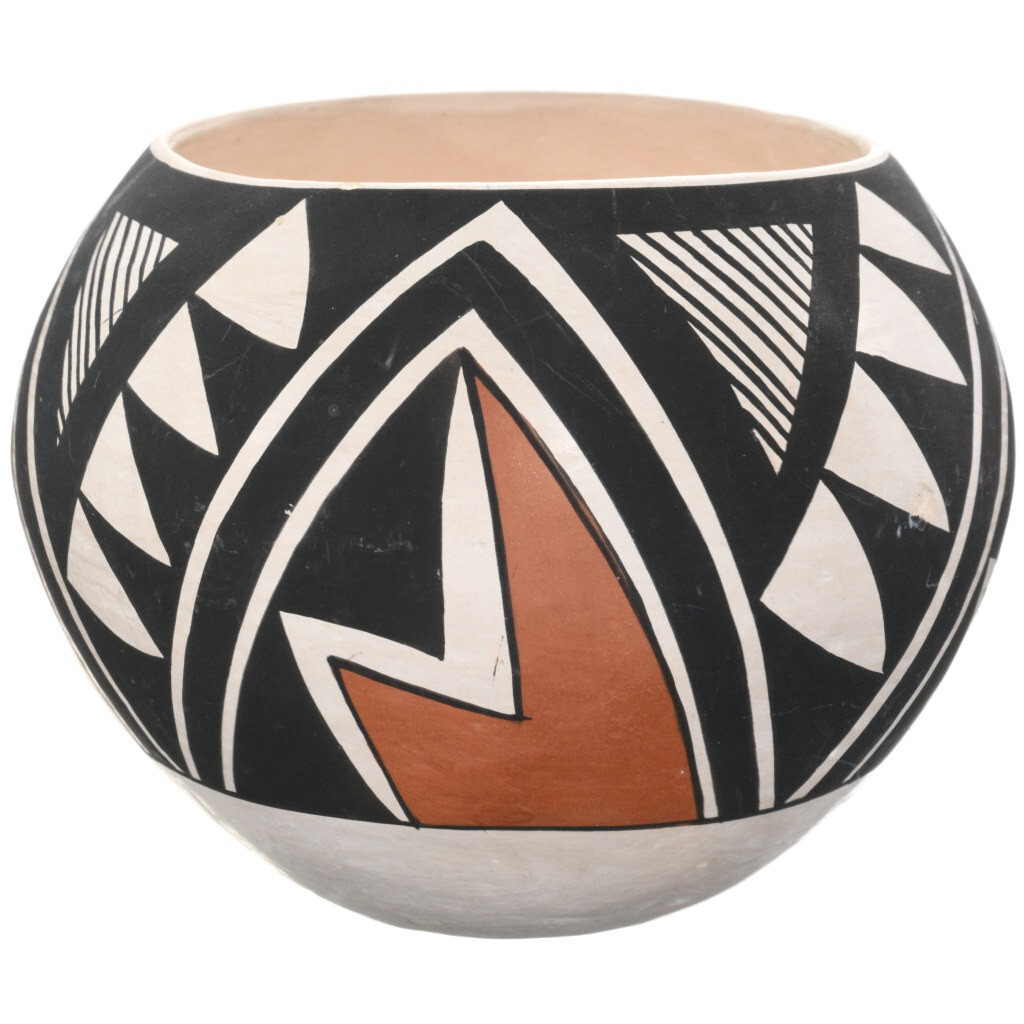

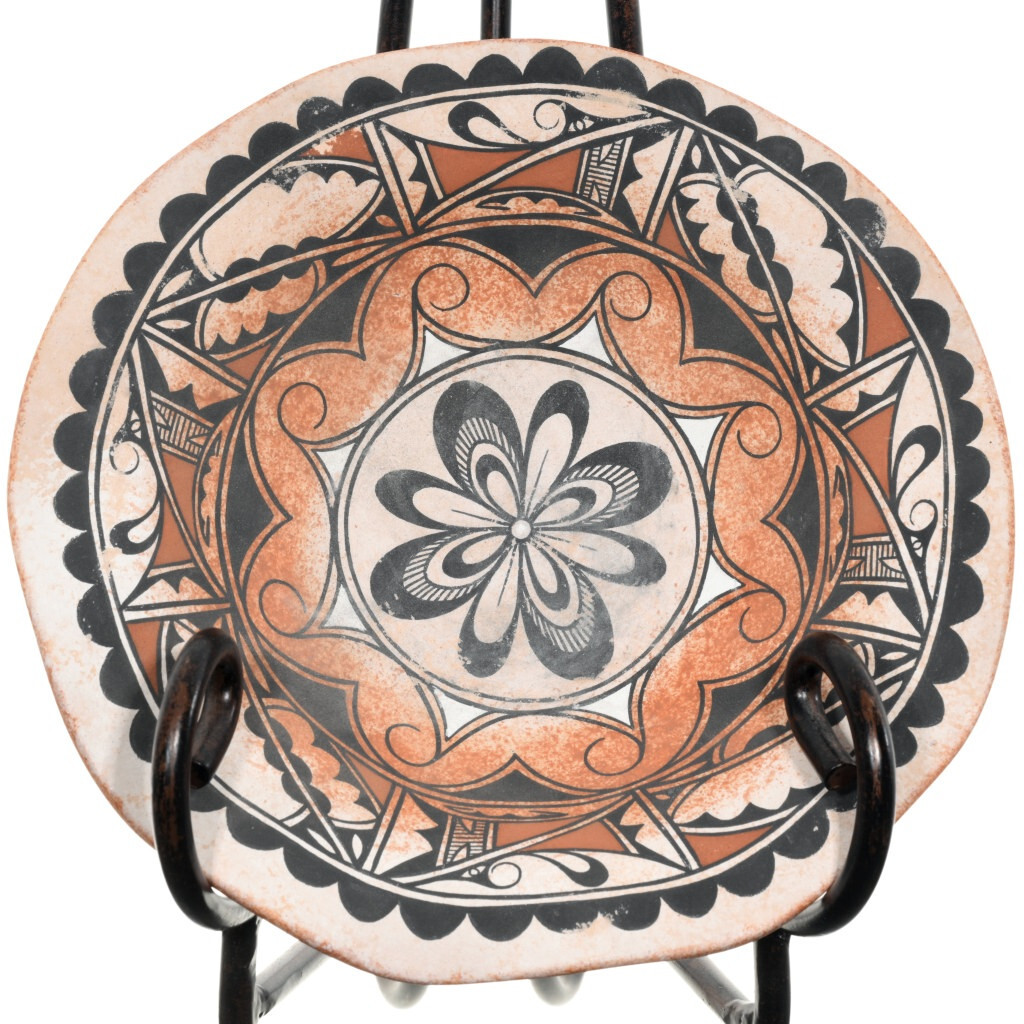
Click Here to View More Pueblo Pottery Available on Alltribes
Ancient Roots
Pueblo pottery evolved from the ancestral cultures often referred to as the Ancestral Puebloans (sometimes historically called Anasazi). Archaeological sites such as Chaco Canyon reveal pottery dating back over 1,000 years.
Originally, pottery served practical purposes — storing water, cooking food, holding seeds. Over time, vessels became more refined, and decoration became a form of visual storytelling.
What’s remarkable is continuity: many techniques used today closely resemble those of ancient ancestors.
How Pueblo Pottery Is Made
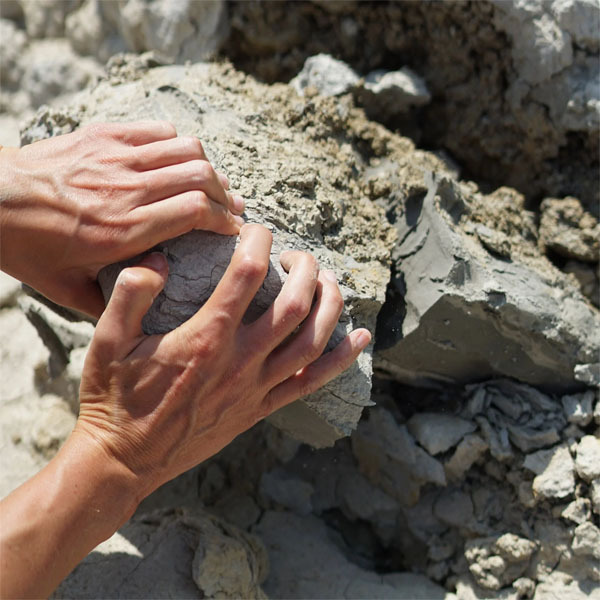
1. Gathering the Clay
Clay is traditionally collected from natural deposits near the Pueblo. This is not simply a material resource — it is part of the land, and therefore part of identity.
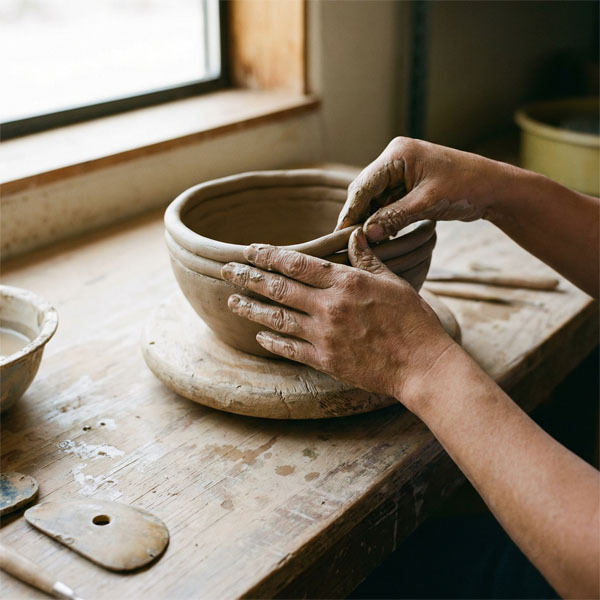
2. Hand-Coiling
Pueblo pottery is built by hand using the coil method. Long ropes of clay are layered and smoothed together. No pottery wheel is used in traditional methods.
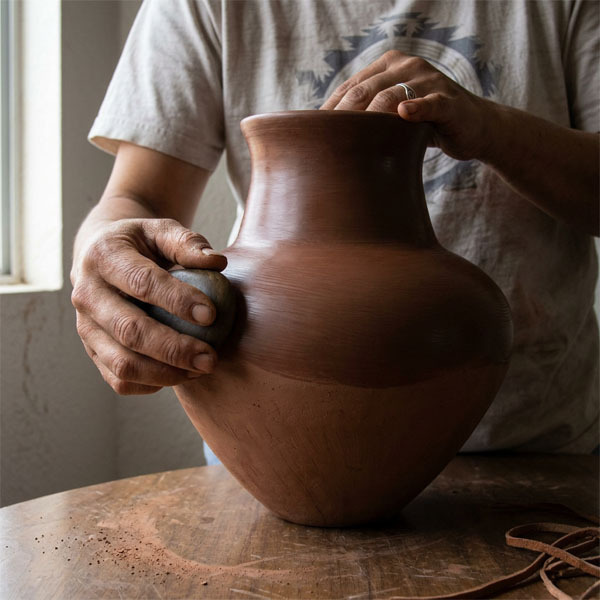
3. Burnishing
Before firing, the surface is polished with a smooth stone, creating a soft sheen that enhances depth and color.
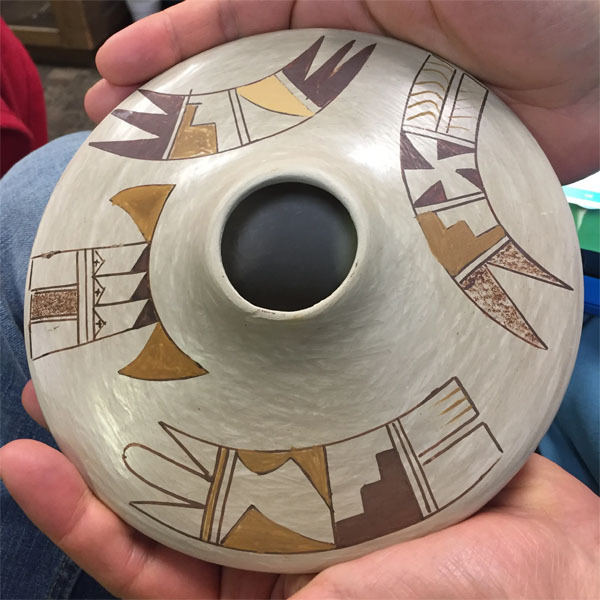
4. Painting With Earth
Designs are painted using natural mineral or plant-based pigments. Black paint may come from boiled plant matter or mineral sources. In the past, brushes would be handmade from yucca leaves or hair. Now, its more common to use store bought brushes.

5. Outdoor Firing
Traditional firings happen outdoors using wood, dung, or other natural fuels. Oxygen levels during firing determine color — especially in blackware pottery.
This process is both technical and ceremonial. It requires patience, experience, and intimate knowledge of the elements.
The Innovation of Black-on-Black Pottery
One of the most influential movements in Pueblo pottery emerged in the early 20th century at San Ildefonso Pueblo through the work of Maria Martinez and her husband Julian Martinez.
Maria perfected a technique in which matte black designs are painted over a polished black surface. The effect is subtle yet dramatic — design revealed through texture rather than color contrast.
Her work gained international recognition and revitalized Pueblo pottery during a time of economic hardship.
Today, many artists continue her legacy while developing their own creative expressions.
Symbolism in Design
Pueblo pottery designs are rarely random decoration. Common motifs include:
-
Rain clouds and lightning (life-giving water)
-
Feathers and birds (spiritual messengers)
-
Deer (abundance and sustenance)
-
Migration patterns (journey and origin)
-
Kiva steps (sacred spaces)
Symbols reflect cosmology, agriculture, seasonal cycles, and community memory. Some imagery may be sacred and not meant for casual replication.
Women as Keepers of the Tradition
Traditionally, pottery-making is passed from mother to daughter. While men may participate in carving or painting in some Pueblos, women have historically been the primary ceramic artists.
The knowledge is often learned through observation rather than formal instruction — shaping clay alongside mothers, grandmothers, and other family.
In this way, Pueblo pottery is not only art — it is lineage.
Pueblo Pottery Today
Contemporary Pueblo potters continue to innovate while honoring tradition. Some create sculptural forms, revive ancient designs, or experiment with scale. Yet the foundational elements remain: hand-built forms, natural materials, cultural meaning.
When building your Pueblo pottery collection, where you buy matters just as much as what you buy.
At Alltribes, we work directly with Native artists and their families whenever possible, ensuring your purchase supports the very communities that keep these traditions alive. When you shop with us, you’re not just acquiring beautiful pottery — you’re investing in authentic Native artistry and helping sustain generations of cultural knowledge.
We proudly share each artist’s Pueblo affiliation so you can connect more deeply with the story behind every piece. Knowing whether a work comes from Acoma, Hopi, Santa Clara, or another Pueblo community adds meaning, history, and context to your collection.
Every piece we offer is handmade using traditional methods. No two are ever exactly alike — and those subtle variations in form, design, and finish are not imperfections, but powerful marks of authenticity. They are the signature of the artist’s hand.
Many Pueblo designs carry cultural and spiritual significance. At Alltribes, we approach these works with the respect they deserve and encourage our collectors to do the same.
When you choose AllTribes, you choose authenticity, integrity, and a direct connection to Native artists and their living traditions.
Why Pueblo Pottery Endures
Pueblo pottery survives because it is rooted in relationship — to land, to ancestors, to community.
It is shaped from the earth of specific places. It is fired under open skies. It carries stories that have never been written down but have never been forgotten.
When you hold a Pueblo pot, you are holding more than clay.
You are holding continuity.
You are holding resilience.
You are holding a living tradition that still breathes.