Native-Made Cuff Bracelets: A Guide to Craftsmanship, Style & Proper Wear
Oct 19th 2026
Native-made cuff bracelets are one of my favorite forms of Native American jewelry because there is so much to discover in a single piece. From a substantial Navajo turquoise cuff to an intricate Zuni inlay bracelet or a distinctive Hopi overlay design, each one showcases a different approach to craftsmanship. Even when two cuffs look completely different, they share something special: they were created by an artist with skill, creativity, and intention.
If you're new to cuff bracelets, there are a few things worth knowing before you choose one. Understanding how they are made, how Native jewelry styles differ, and—perhaps most importantly—how to properly put one on can help you enjoy your cuff while protecting it at the same time. That's why we've included written instructions and video tutorials to show you how to measure your wrist for a cuff and how to properly put one on and take it off.
What Is a Cuff Bracelet?
So, what exactly makes a bracelet a cuff? Unlike a traditional bracelet with a clasp or hinge, a cuff is a solid or semi-rigid bracelet with an opening that allows it to be slipped onto the wrist. The proper way to put one on isn't to pull the ends apart, but to gently roll the cuff onto your wrist and slide it into position.
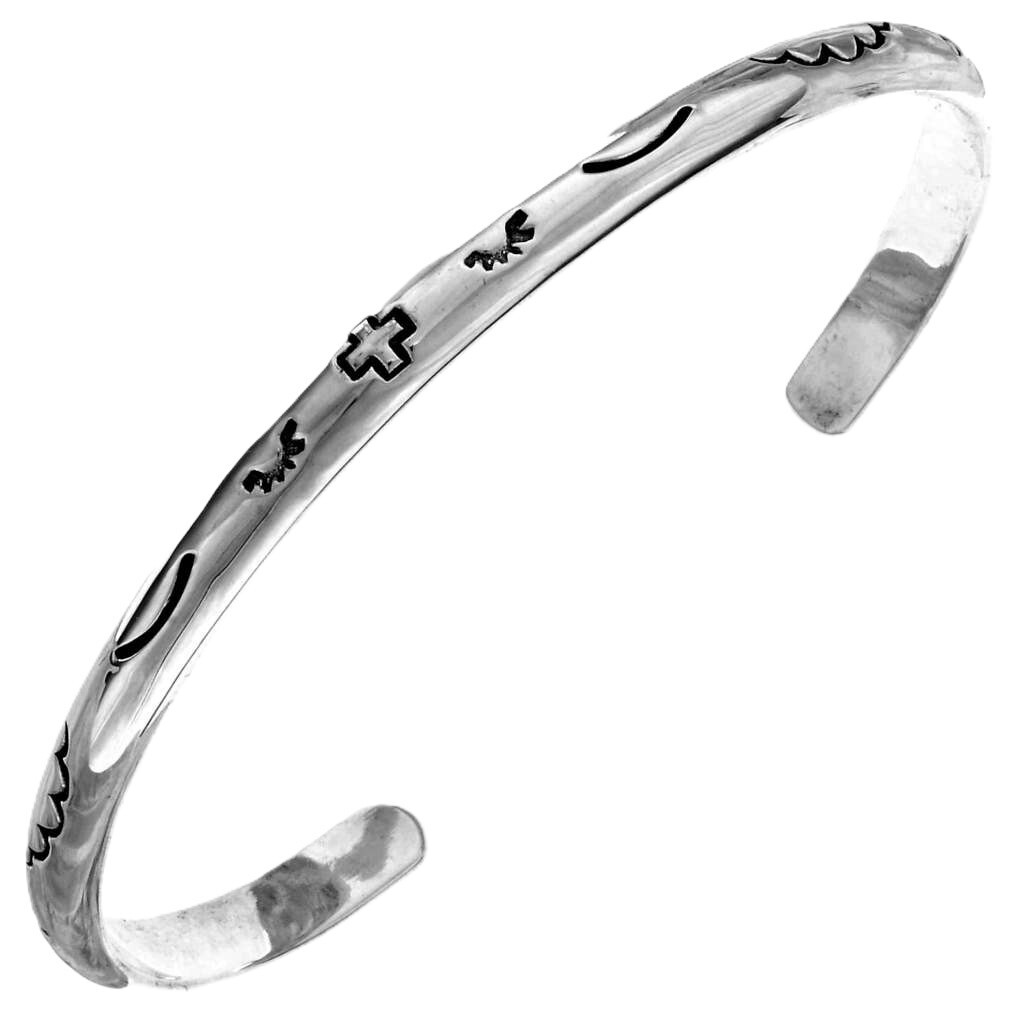
One of the things I love about Native-made cuffs is just how much variety there is. Some are simple, hand-stamped silver bands, while others are bold works of art featuring turquoise, coral, jet, spiny oyster, shell, and other natural materials. The silverwork can be just as interesting as the stones, with techniques such as stamping, hammering, repoussé, overlay, hand fabrication, and intricate stone setting all adding character to the finished piece.
Navajo, Zuni & Hopi Cuff Bracelets
One of the most interesting things about Native American jewelry is that there isn't just one style. Different Native artists and communities have developed their own distinctive approaches to working with silver and stone, and learning to recognize some of those differences makes collecting—and simply looking at the jewelry—so much more fun.
Navajo, Zuni, and Hopi cuff bracelets are great examples. You may see a bold turquoise and silver Navajo cuff, a Zuni bracelet covered with precisely cut stones, or a Hopi cuff where the silverwork itself takes center stage through the use of overlay. Each style has its own character, and that's part of what makes Native-made cuff bracelets so fascinating to explore.
Navajo Cuff Bracelets
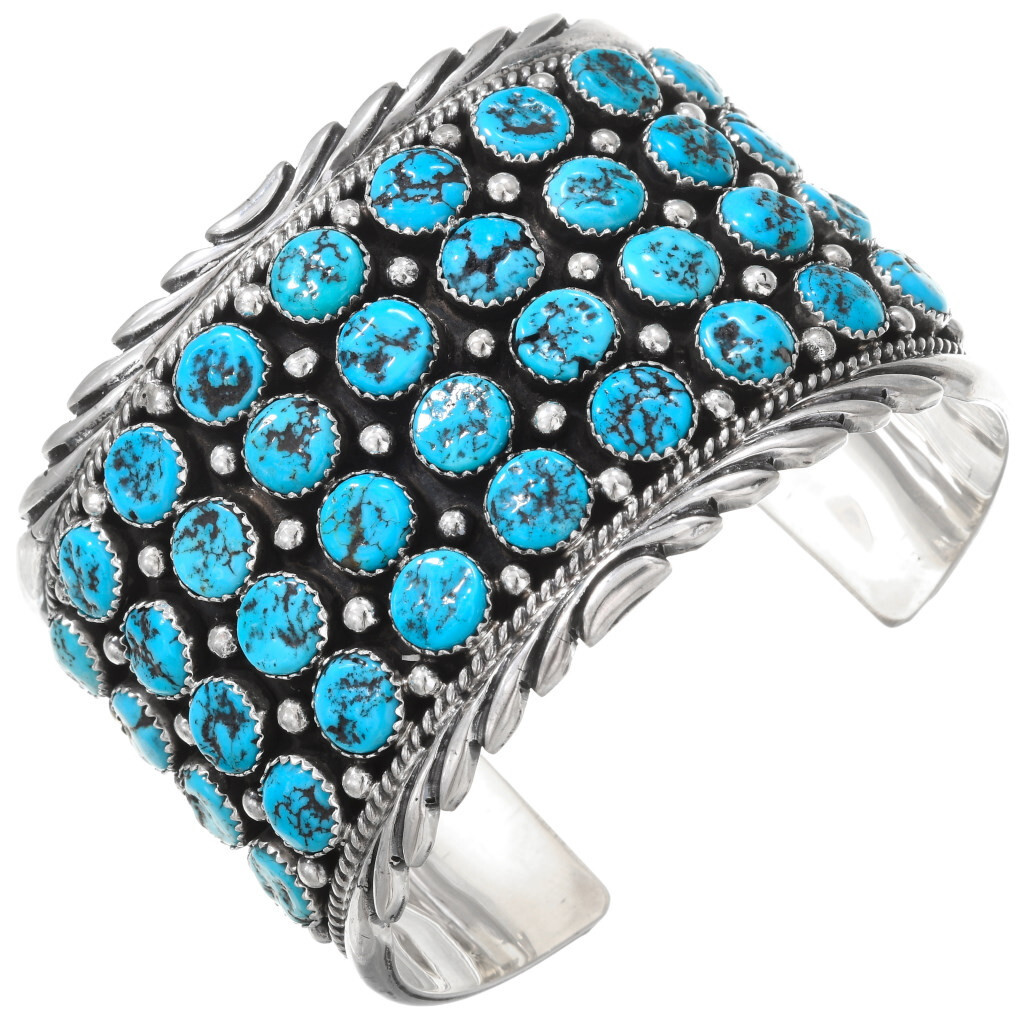
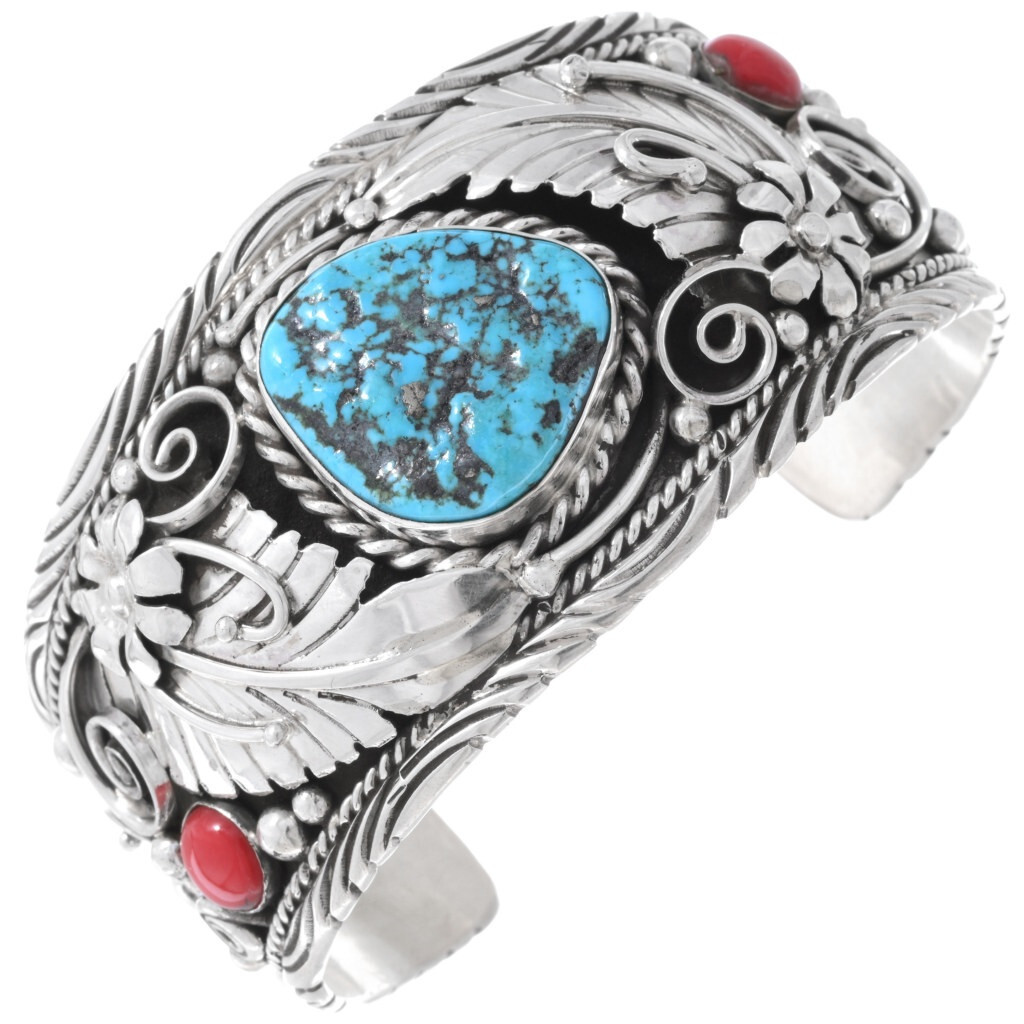
This Navajo bracelet pairs a striking turquoise cabochon with bold silverwork, showcasing the balance of natural stone and handcrafted artistry characteristic of Navajo jewelry.
Navajo silversmiths are particularly well known for bold silverwork and turquoise jewelry. Navajo cuffs may feature large turquoise cabochons surrounded by hand-stamped or hand-fabricated silverwork.
Traditional Navajo cuff bracelets can include techniques such as silver stamping, saw work, twisted wire, handmade bezels, and heavy silver construction. Some pieces are dramatic statement bracelets, while others have a more understated, rustic appearance.
Turquoise is especially important in Navajo jewelry, and collectors may encounter cuffs featuring stones from well-known Southwestern sources as well as turquoise from locations around the world.
Zuni Cuff Bracelets
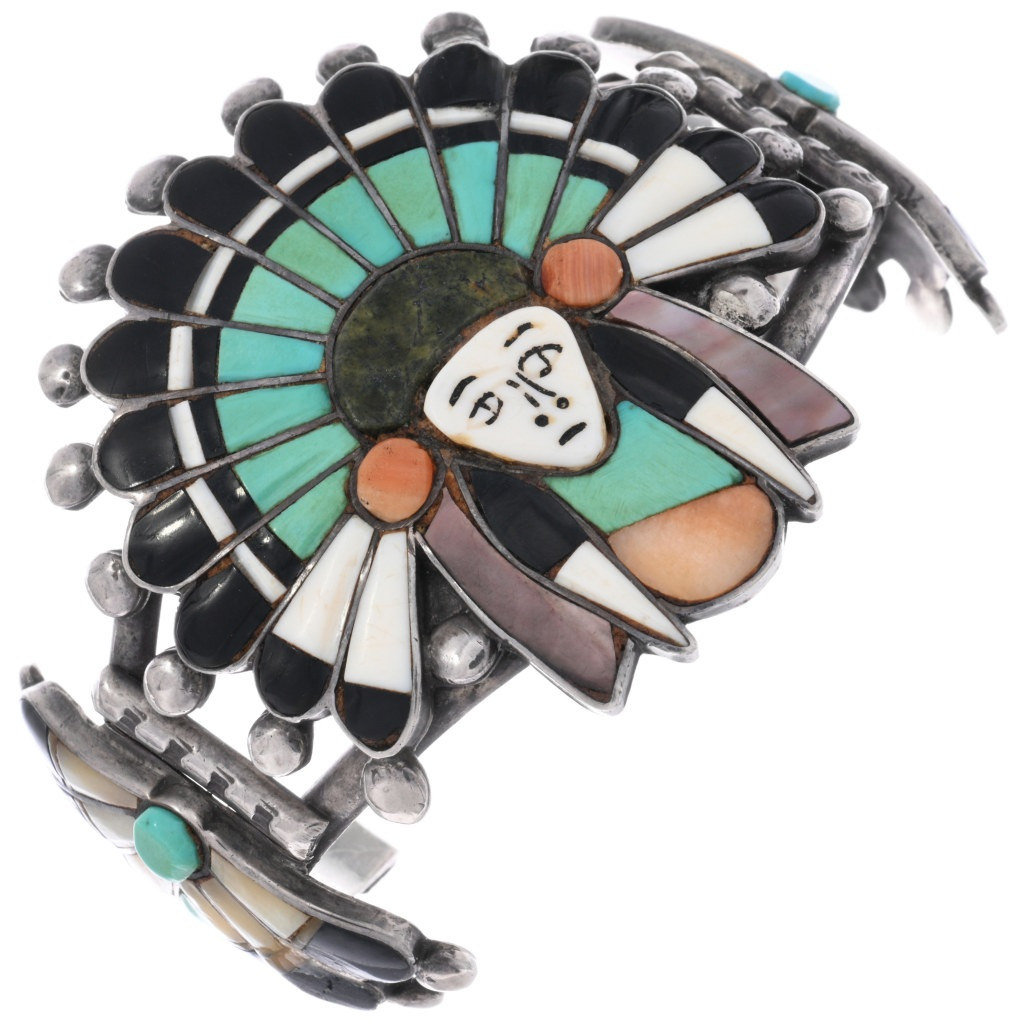
This Zuni bracelet features precisely cut stones carefully arranged to create an intricate pictorial design, showcasing the exceptional precision and artistry of Zuni inlay work.
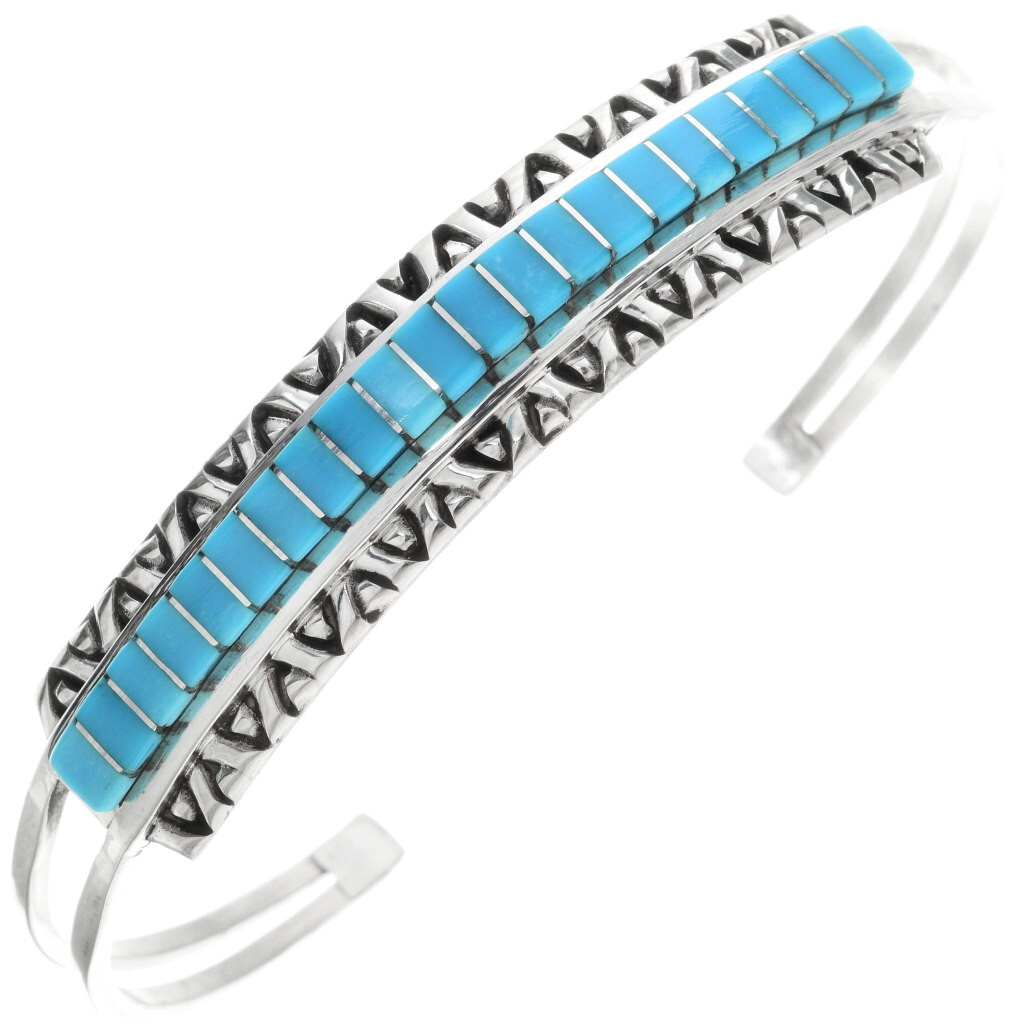
With a single continuous row of turquoise inlay, this Zuni bracelet demonstrates the clean lines, precise stonework, and understated elegance of traditional Zuni jewelry.
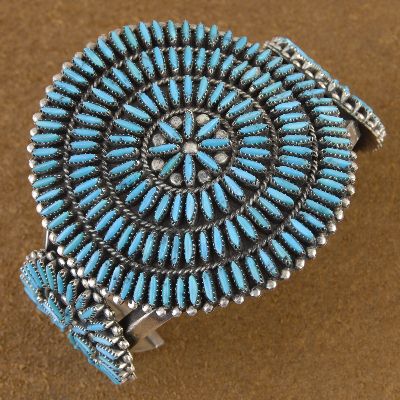
Featuring rows of slender turquoise stones set closely together, this traditional Zuni needlepoint bracelet highlights the delicate stonework and distinctive cluster style of Zuni jewelry.
Zuni jewelry is widely recognized for detailed stonework and intricate inlay. Zuni artists are especially known for precise stone cutting and the use of techniques such as petit point and needlepoint.
A Zuni cuff may contain numerous small turquoise stones arranged in carefully constructed clusters. Other pieces incorporate inlay using turquoise, jet, shell, coral, and other stones to create intricate geometric or pictorial designs.
The amount of detailed stonework in some Zuni bracelets makes them particularly appealing to collectors who appreciate precision and intricate craftsmanship.
Hopi Cuff Bracelets
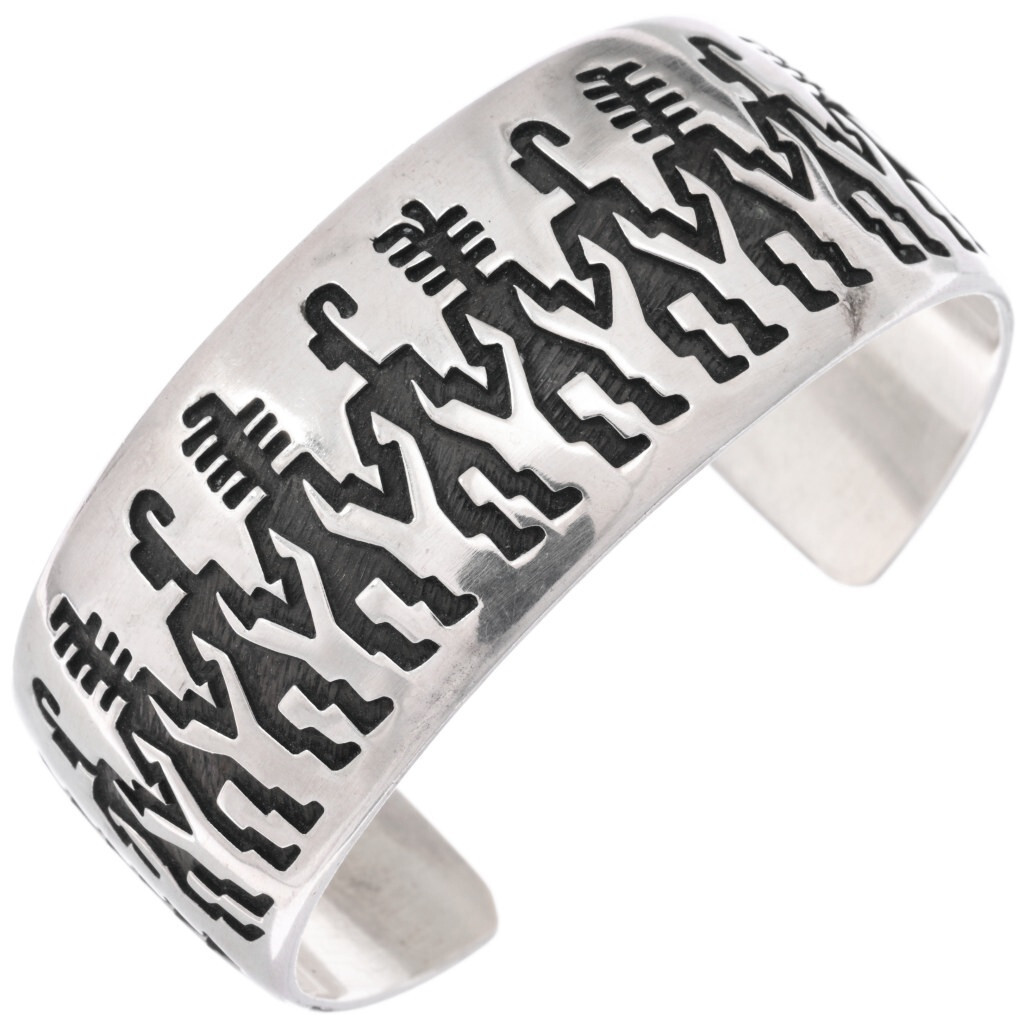
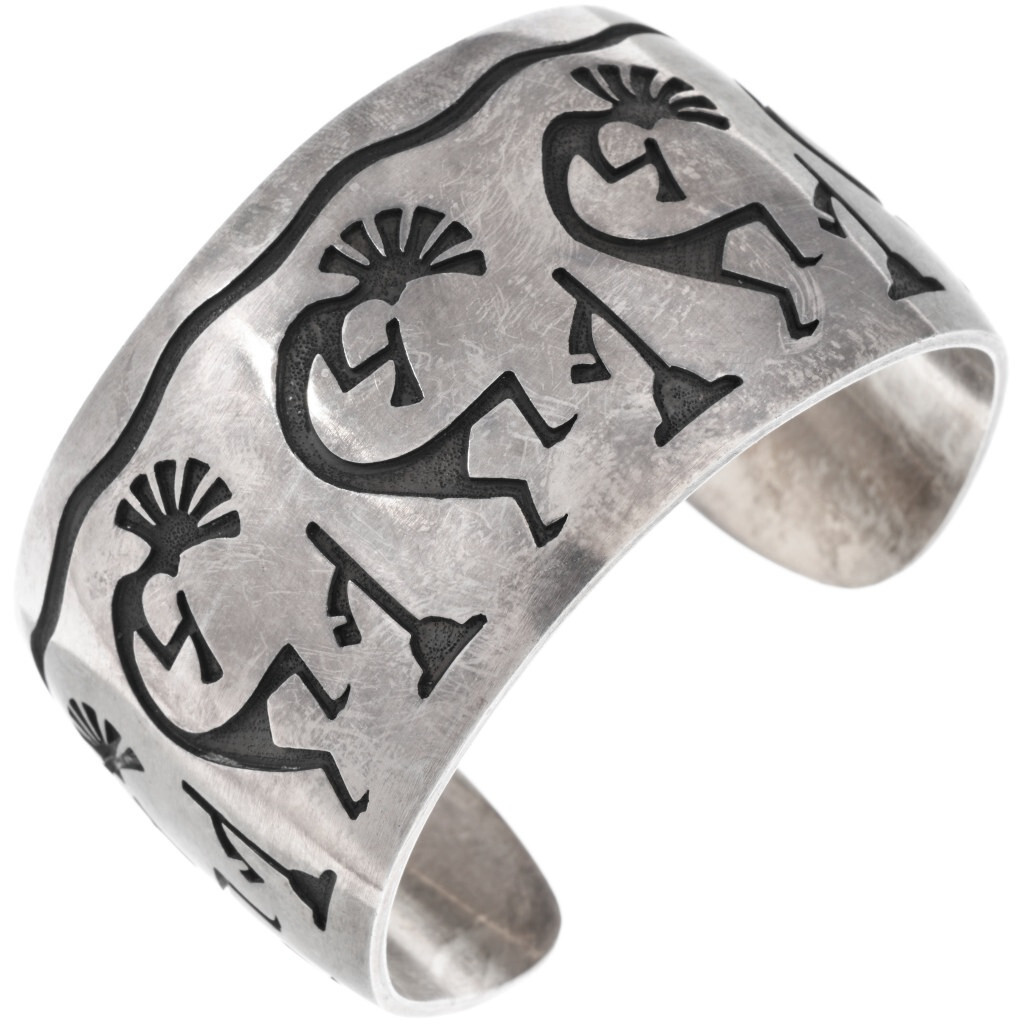
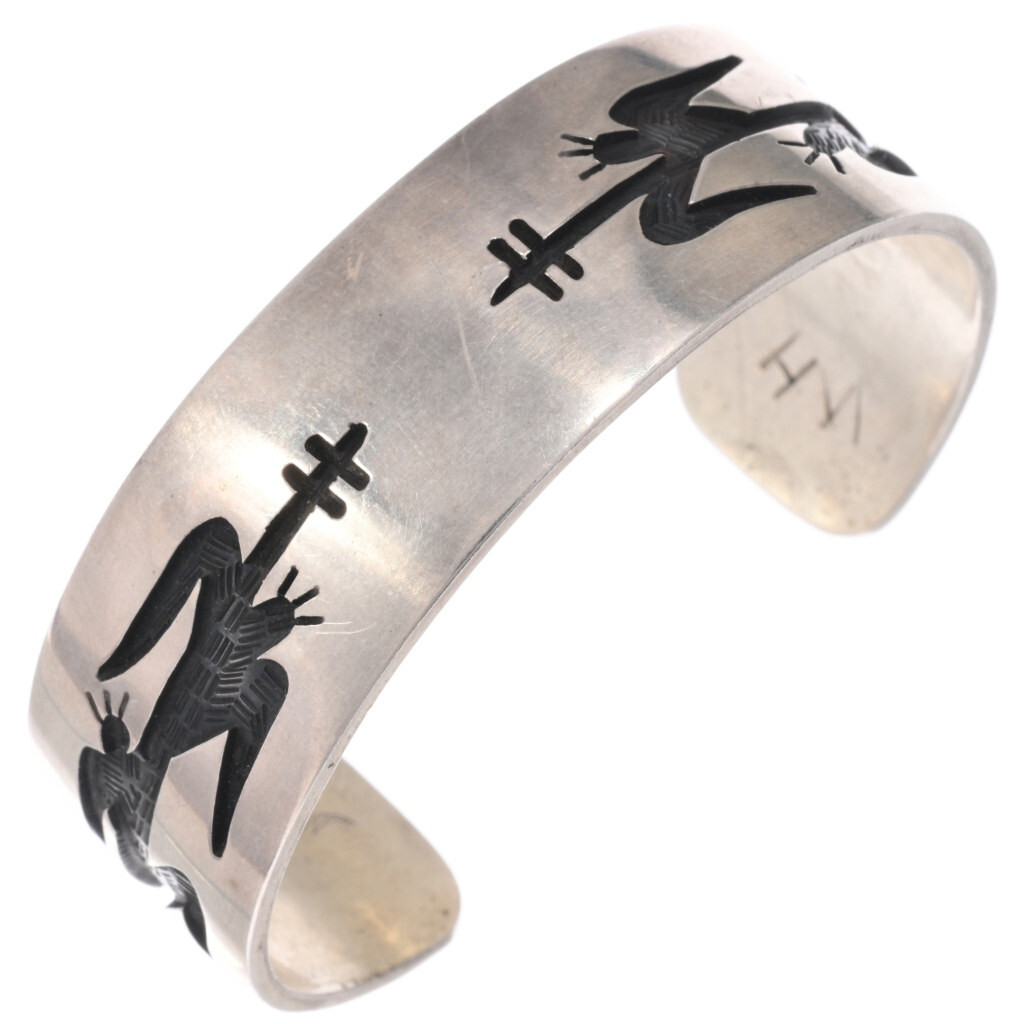
Hopi jewelry is especially known for its distinctive overlay technique. In overlay jewelry, layers of silver are carefully fabricated and incorporated into the design, often creating strong contrasts between polished and oxidized surfaces.
Hopi cuffs frequently feature geometric patterns and imagery inspired by the natural and cultural world. Rather than relying primarily on large turquoise stones, many Hopi bracelets allow the silverwork itself to take center stage.
What Makes a Native-Made Cuff Special?
One of the things that makes a Native-made cuff so special is knowing how much goes into creating it. Each piece is created with intention, from the initial design and choice of materials to the way the silver is shaped and the stones are selected and set. The artist's decisions about texture, proportion, color, and detail give every cuff its own personality.
When you look closely at a handmade cuff, you can often see those choices come to life. Hand-stamped silver may have subtle variations, stones may have their own unique color and character, and small differences in the craftsmanship remind you that you're looking at something made by hand rather than mass-produced. That's part of the beauty of Native-made jewelry—and part of what makes each cuff something to appreciate and enjoy.
Now that we've talked about what makes these bracelets special, let's talk about something just as important: getting the right fit and knowing how to properly put your cuff on and take it off. We've put together the following instructions and videos to make it easy.
How to Put on a Cuff Bracelet Properly
How to Measure your Wrist for the Perfect Fit
If you don't have a tape measure just use a string or even a strip of paper. Watch the video to see where to measure and how to plan for cuffs with different widths. (see video above)
The Proper Way to Put On a Cuff Bracelet
To put on a cuff bracelet properly, do not bend the cuff or pull the ends apart. Instead, place one side of the cuff opening against the soft area of your arm just above the back of your wrist, between the two bones. From there, gently roll your arm into the cuff, or roll the cuff onto your arm. Once the cuff is in place, slide and rotate it gently until it is comfortably positioned on your wrist. (see video above)
This rolling motion helps protect the shape and integrity of the cuff by avoiding unnecessary bending or spreading of the silver.
The Most Important Rule: Never Bend Your Cuff
There's one rule that's especially important: never bend or pull the ends of a cuff apart.
A cuff is designed to be put on using a gentle rolling motion. Repeatedly bending the silver can cause metal fatigue, distort the shape, weaken soldered components, and potentially loosen stones or damage bezels. This is especially important with vintage, antique, and heavily detailed cuffs.
If a cuff doesn't fit properly, don't try to adjust it yourself. A jeweler experienced in working with Native American jewelry can determine whether it can be safely sized.
How to Measure Your Wrist for a Cuff Bracelet
Getting the right measurement is the first step toward finding a cuff that fits comfortably. The way you measure depends on whether you're purchasing a narrow or wide cuff.
For a narrow cuff, measure around your wrist between the wrist bone and your hand, approximately where the cuff will sit.
For a wide cuff, measure around the widest area the cuff will need to fit over. Because a wide cuff covers more of your wrist, it needs to accommodate a larger area when you put it on.
Whichever style you're measuring for, keep your arm relaxed and wrap the measuring tape snugly around your wrist without pulling it tight. Record your measurement in inches.
Don't have a measuring tape? A strip of paper or string works just as well. Wrap it around your wrist, mark where the ends meet, and then measure it with a ruler.
How Should a Cuff Fit?
A properly fitted cuff should feel secure but comfortable. It should stay in place while still allowing you to move your wrist naturally. It shouldn't pinch, feel uncomfortably tight, or slide around your wrist.
Taking an accurate measurement helps ensure that your cuff can be put on and removed using the proper rolling technique—without bending or spreading the bracelet.
For a visual demonstration, watch our video above to see exactly where and how to measure your wrist for a cuff bracelet.
Caring for Your Native-Made Cuff Bracelet
Proper care can help preserve both the silver and stones.
Keep Turquoise Away From Harsh Chemicals
Perfume, hairspray, lotions, cleaning chemicals, and other substances can affect turquoise and other natural stones. Put your jewelry on after applying cosmetics and personal-care products.
Avoid Swimming & Bathing With Your Cuff
Chlorinated and salt water can be hard on jewelry. It is best to remove your cuff before swimming, bathing, or entering a hot tub.
Store It Carefully
Keep your cuff in a dry jewelry box or soft pouch when you are not wearing it. If you have several pieces, avoid storing them where they can scratch against one another.
Be Careful With Silver Polish
Not every Native-made cuff should be aggressively polished. Excessive polishing can remove desirable patina and potentially affect the character of an older piece.
For vintage and collectible jewelry, consider having the piece evaluated before using commercial polishing products.
Wear the Tradition With Care
A Native-made cuff bracelet is designed to be worn and enjoyed, but it deserves to be handled with care. Understanding how the bracelet was made, learning about the artistic traditions behind it, and putting it on correctly can help protect the piece for years to come.
Whether you prefer a bold Navajo turquoise cuff, an intricate Zuni inlay bracelet, a distinctive Hopi overlay cuff, or a simple handmade silver design, the right cuff is more than a finishing touch—it is a piece of Southwestern artistry you can carry with you every day.